
On Thursday, March 1, 2018, the Society for Rural Development Laz organized a lecture ‘Healthy vegetables are the basis for a healthy crop’ at the Pustov mlin guest house, Cerovica 19. Lecturer Fanči Perdih is the founder and owner of the Amarant brand, the only organic seed house that produces organic seed for sale in Slovenia.
GA. Perdih leads and participates in the cultivation of seeds, seedlings and selection of plants for seeding. In addition to the production of seeds, he is engaged in the maintenance and selection of Slovenian indigenous varieties, the cultivation of seedlings and technical assistance to farmers who grow seeds. In the lecture, we touched on how to properly germinate seeds in order to get a good yield and, as a result, good seeds for the future.
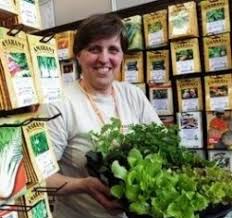
GA. Fanči Perdih
The lecturer explained to us how important it is to follow the sowing calendar. When it is necessary to plant a certain species in order to have the best possible or the healthiest crop possible. Believe it or not, the plants are also planted and picked on the moon’s monks. Organic agriculture is based on thousands of years of knowledge of our ancestors. Some of the listeners heard for the first time that plants are planted and sown, and harvested either on a leaf, flower, stem or root. We heard how it is most economical to grow vegetables in the garden by sowing two complementary types of vegetables, e.g. Carrots and lettuce, due to the fact that the salad that germinates earlier loosens the soil to the carrot, which later emerges. With this, the carrot can thicken its root. We learned that it is best to grow vegetables in rows. The conversation also revolved around the rule of using teas to help plant grow. Not every herbal tea is suitable for all plants. It is necessary to correctly dose only these. In the end, we touched on the correct use of natural fertilizers (compost, peat…) and their importance to microorganisms that benefit plant growth and their development with their work. If we prepare the soil inappropriately in late autumn, we do not have to hope for a good harvest in the spring and summer.
Towards the end of the lecture, the debate on how to properly prepare the seeds developed. The lecturer said that if we want to have a good shallot, we put away smaller bulbs for the winter and seeds and we will have a good harvest in the summer. A similar rule applies to seed potatoes.
At the end of the lecture, Mrs. Fanči Perdih offered a large selection of organic seeds. The participants responded with pleasure and stocked up for the new season.